How Much Does a New AC Unit Cost?
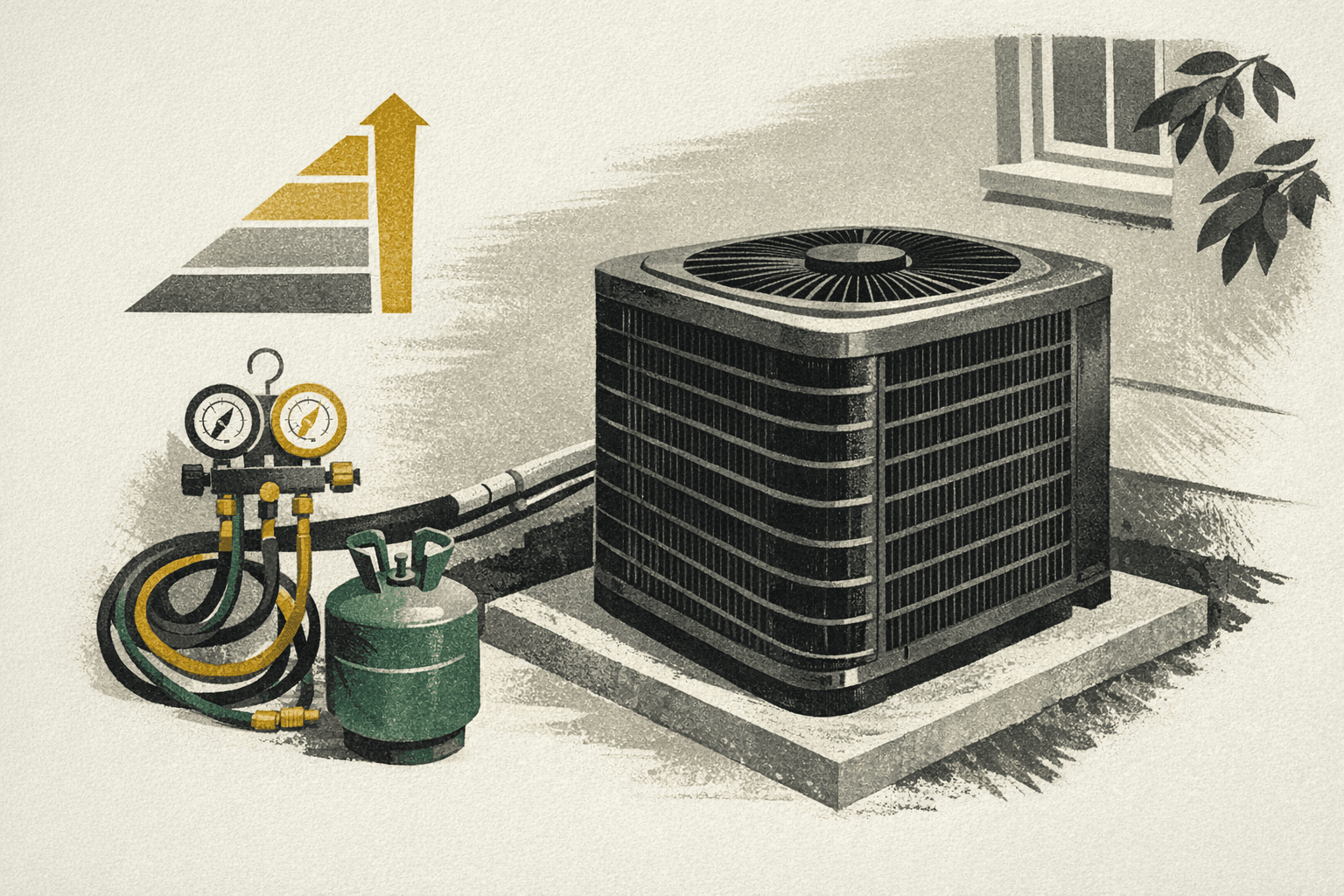
A new central AC unit costs $3,800 to $7,500 on average for a replacement, with a national average of approximately $5,750 for a 3-ton standard-efficiency unit. New installations without existing AC run $5,800 to $14,400 including ductwork. Ductless mini-splits cost $2,100 to $3,900 per zone. Use our calculator to estimate your project by system type, efficiency, and state.
Showing costs for Ohio
Loading calculator…
Updated March 2026 · Based on pricing data from Angi, HomeGuide, HVAC.com, This Old House, Fixr, and 15+ HVAC industry sources
Average AC Unit Costs by System Type and Size
Costs include equipment and standard installation labor at national average rates. New installations and ductwork add to the base price.
| Home size | Tonnage | Standard (14-16 SEER) | High efficiency (17-20 SEER) |
|---|---|---|---|
| 1,000-1,200 sqft | 2 ton | $2,500-$4,200 | $3,600-$5,600 |
| 1,200-1,500 sqft | 2.5 ton | $3,000-$5,000 | $4,200-$6,500 |
| 1,500-2,000 sqft | 3 ton | $3,600-$6,000 | $5,000-$7,800 |
| 2,000-2,500 sqft | 3.5 ton | $4,200-$7,000 | $5,800-$9,100 |
| 2,500-3,000 sqft | 4 ton | $4,800-$8,000 | $6,600-$10,400 |
| 3,000-3,500 sqft | 5 ton | $6,000-$10,000 | $8,200-$13,000 |
Source: Angi, HomeGuide, and HVAC.com national pricing surveys (2025-2026). Includes equipment and labor for replacement of existing system.
What Affects the Cost of a New AC Unit
Seven factors drive the difference between a $2,500 replacement and a $14,000+ new installation.
System size (tonnage)
Sized at 1 ton per 500-600 sqft. A 2-ton unit costs $2,500-$4,200, while a 5-ton unit runs $6,000-$10,000. Oversizing wastes money and causes humidity problems.
SEER efficiency rating
Standard 14-16 SEER costs $3,600-$5,200 for a 3-ton unit. Premium 21+ SEER costs $8,000-$12,000 but saves $300-$550/year on energy in hot climates.
System type
Central AC (split system) costs $3,800-$7,500. Ductless mini-splits cost $2,100-$3,900 per zone. Mini-splits work well for homes without ductwork or for room additions.
New install vs replacement
Replacing an existing unit saves $1,500-$3,000 because electrical, refrigerant lines, and ductwork already exist. New installs need all that infrastructure.
Ductwork condition
Existing ducts in good shape cost nothing extra. Repairs run $800-$2,500. Completely new ductwork adds $3,000-$7,500 and is the biggest wildcard in AC installation.
Geographic location
The same installation costs 35-50% more in California and Hawaii than in Mississippi or Arkansas. Southern states with year-round AC demand often have higher contractor rates.
Electrical upgrades
New installs may need a dedicated 240V circuit ($300-$800). Older homes may need a panel upgrade ($1,500-$3,000) if the electrical panel cannot handle the load.
Itemized Cost Breakdown for a 3-Ton Central AC Replacement
Typical 2,000 sqft home, replacing an existing central AC with a standard 14-16 SEER unit. Use this checklist when comparing contractor bids.
| Component | Cost range |
|---|---|
| AC condenser unit (outdoor, 3 ton) | $1,800-$3,200 |
| Evaporator coil (indoor) | $600-$1,200 |
| Installation labor (4-8 hours) | $1,200-$2,100 |
| Refrigerant charge (R-410A) | $200-$500 |
| Thermostat upgrade (optional) | $100-$300 |
| Electrical disconnect/whip | $75-$200 |
| Permits and inspections | $100-$500 |
| Old unit removal and disposal | $100-$300 |
| Total (3-ton replacement) | $4,175-$8,300 |
Request an itemized quote from every contractor. Lump-sum bids make it impossible to compare pricing fairly across bids.
Central AC vs. Ductless Mini-Split: Which Costs Less?
The right system depends on your home layout, existing infrastructure, and cooling needs.
| Factor | Central AC | Ductless mini-split |
|---|---|---|
| Cost (replacement) | $3,800-$7,500 | $2,100-$3,900/zone |
| Cost (new install) | $5,800-$14,400 | $3,500-$8,000 |
| Best for | Whole-house cooling | Room additions, no ducts |
| Efficiency | 14-22 SEER | 17-30+ SEER |
| Ductwork needed | Yes | No |
| Zone control | Limited (dampers) | Individual per room |
| Lifespan | 15-20 years | 15-20 years |
For homes with existing ductwork, central AC is usually cheaper. For homes without ducts, mini-splits save $3,000 to $7,500 in ductwork costs.
How to Save Money on a New AC Unit
- Get at least three quotes. HVAC bids for the same job can vary 40% to 60% between contractors. Itemized quotes let you compare line by line.
- Buy in the off-season. Spring (March to May) and fall (September to November) are the best times. Contractors offer 10% to 20% discounts when demand is low.
- Choose the right SEER for your climate. In moderate climates, a 14-16 SEER unit saves $4,000 to $7,000 upfront vs premium models. The energy savings rarely justify the cost in northern states.
- Keep your existing ductwork if possible. New ductwork adds $3,000 to $7,500. If your ducts are less than 20 years old and well-sealed, cleaning and minor repairs are far cheaper.
- Look for manufacturer rebates. Carrier, Trane, and Lennox offer $200 to $1,500 in seasonal rebates. Utility companies often add $100 to $500 for high-efficiency units.
- Do not oversize the unit. A properly sized unit costs less, runs more efficiently, and lasts longer. Insist on a Manual J load calculation, not a square-footage-only estimate.
- Check for tax credits. The federal energy efficiency tax credit covers up to 30% of equipment cost (max $2,000) for qualifying high-efficiency AC systems through 2032.
Frequently Asked Questions
How much does a new AC unit cost?
A new central AC unit costs $3,800 to $7,500 on average in the United States for a standard replacement, including equipment and installation labor. The national average is approximately $5,750 for a 3-ton, 14-16 SEER unit in a 2,000 square foot home. New installations without existing ductwork cost $5,800 to $14,400 due to the added expense of ductwork ($3,000 to $7,500). Ductless mini-split systems cost $2,100 to $3,900 per zone. Costs vary significantly by system size (tonnage), efficiency rating (SEER), and geographic location. Use the calculator above to estimate your specific project.
What size AC unit do I need for my house?
The general rule is 1 ton of cooling capacity per 500 to 600 square feet of living space. A 1,500 sqft home typically needs a 2.5 to 3 ton unit, a 2,000 sqft home needs 3 to 3.5 tons, and a 2,500 sqft home needs 4 to 4.5 tons. However, these are rough guidelines. Factors like ceiling height, insulation quality, number of windows, climate zone, and sun exposure all affect sizing. An undersized unit runs constantly and cannot keep up on hot days, while an oversized unit short-cycles, causing humidity problems and higher energy bills. A proper Manual J load calculation from an HVAC contractor costs $100 to $300 and gives the most accurate sizing.
Is a higher SEER rating worth the extra cost?
It depends on your climate and how long you plan to stay in the home. A 14 SEER unit costs $3,600 to $5,200 while a 20+ SEER unit costs $8,000 to $12,000, a premium of $4,000 to $7,000. Higher SEER units save $150 to $550 per year on energy bills depending on usage and climate. In hot climates like Arizona, Texas, or Florida where AC runs 6 to 8 months per year, a high-efficiency unit pays for itself in 8 to 12 years. In moderate climates where AC runs 3 to 4 months, payback takes 15 to 20 years, making standard efficiency a better value. The federal minimum is 14 SEER in northern states and 15 SEER in southeastern states.
How long does a new AC unit last?
A central air conditioner lasts 12 to 20 years with proper maintenance, with an average lifespan of 15 to 17 years. Standard-efficiency units (14-16 SEER) typically last 12 to 15 years, while high-efficiency models with better components can reach 15 to 20 years. Key factors affecting lifespan include annual maintenance (cleaned coils and fresh filters add 3 to 5 years), proper sizing (oversized units short-cycle and wear faster), and climate (units in hot climates like Phoenix or Miami run harder and wear out sooner). Signs your AC needs replacement include frequent repairs exceeding 50% of replacement cost, R-22 refrigerant (phased out), rising energy bills, and uneven cooling.
Should I replace just the AC or the whole HVAC system?
If your furnace is under 10 years old and working well, replacing just the AC unit saves $3,000 to $5,000 compared to a full system. However, replacing both at the same time costs 15% to 20% less than doing them separately due to shared labor costs. Mismatched systems can also lose 1 to 2 SEER points of efficiency because the indoor and outdoor components are not optimized together. Most HVAC contractors recommend replacing both if the furnace is over 15 years old or uses R-22 refrigerant. A full HVAC system (AC plus furnace) costs $8,500 to $14,400 installed, compared to $3,800 to $7,500 for the AC unit alone.
Can I install an AC unit myself to save money?
No, AC installation requires EPA Section 608 certification to handle refrigerant, and most jurisdictions require licensed HVAC contractors and permits for the work. DIY installation voids the manufacturer warranty (typically 5 to 10 years for parts) and may violate local building codes. Improper installation causes refrigerant leaks, poor efficiency, and early failure. The only DIY savings opportunity is removing the old unit yourself ($200 to $500 in disposal fees) or handling minor electrical prep work. Labor accounts for 30% to 40% of total installation cost, so the potential savings are real, but the risks outweigh them. Get at least three licensed contractor quotes and verify each holds a valid HVAC license in your state.
Related Calculators
Window Replacement Cost Calculator
Estimate window replacement costs by style, material, and state. New windows improve AC efficiency by reducing heat gain.
New Roof Cost Calculator
Estimate roof replacement costs. Proper roof insulation and ventilation directly affect your AC workload and energy bills.
Bathroom Remodel Cost Calculator
Estimate bathroom remodel costs by size, scope, and finish level with state-adjusted pricing.
Kitchen Remodel Cost Calculator
Estimate kitchen remodel costs by size, scope, and material tier.