How Much Does a Dental Crown Cost?
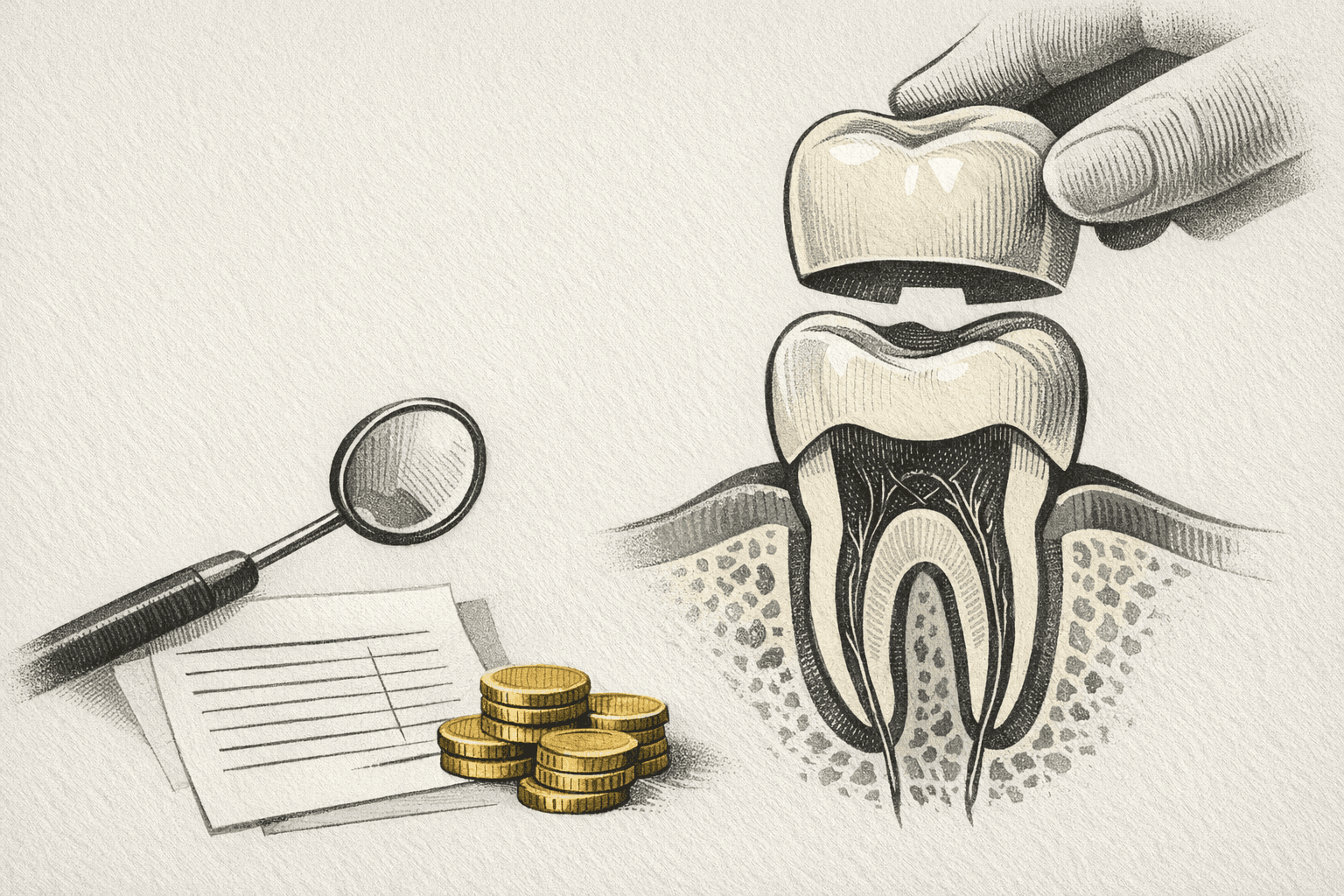
A dental crown costs $800 to $3,000 per tooth without insurance. With insurance covering 50%, expect to pay $400 to $1,500 out of pocket. Porcelain-fused-to-metal averages $1,100, while zirconia and all-porcelain average $1,300. Costs vary by up to 100% based on your state and city. Use our free calculator to estimate your total cost.
Showing costs for Ohio
Loading calculator…
Updated March 2026 · Based on pricing data from 28 sources including CostHelper, Authority Dental, Credee, CareCredit, GoodRx, and ADA/CMS fee schedules
Dental Crown Cost by Material Type
Crown material is the single biggest cost factor. The table below shows national average pricing for each crown type. Zirconia and gold cost more upfront but last significantly longer, making them a better value per year for many patients.
| Material | Low | High | Lifespan | Cost/Year |
|---|---|---|---|---|
| Porcelain-fused-to-metal (PFM) | $800 | $2,400 | 8-15 yrs | ~$92 |
| All-porcelain / ceramic | $800 | $3,000 | 5-15 yrs | ~$130 |
| Zirconia | $1,000 | $3,000 | 10-20+ yrs | ~$87 |
| Metal (base alloys) | $800 | $2,500 | 15-20+ yrs | ~$72 |
| Gold alloy | $600 | $2,500 | 15-20+ yrs | ~$68 |
| E-Max (lithium disilicate) | $1,000 | $2,500 | 5-15 yrs | ~$120 |
| Same-day / CEREC | $860 | $3,000 | 10-15 yrs | ~$119 |
Cost/year is calculated using the midpoint price and average lifespan for each material. Gold and zirconia crowns offer the lowest annual cost despite higher upfront pricing.
What Affects the Cost of a Dental Crown
Dental crown prices in the United States range from $600 to $3,000+ for a single tooth. Understanding the main cost drivers helps you evaluate whether a quote from your dentist is fair and where you might be able to save.
Crown material (biggest factor)
The type of material your dentist uses determines the base price. Porcelain-fused-to-metal (PFM) is the most affordable at $800 to $2,400. All-porcelain and zirconia crowns cost $800 to $3,000 but offer better aesthetics or durability. Gold crowns ($600 to $2,500) last the longest at 15 to 20+ years. Your dentist will recommend a material based on tooth position, bite force, and whether the tooth is visible when you smile.
Geographic location
Dental crown costs vary by 40% to 100% depending on where you live. A porcelain crown that costs $2,300 in Manhattan or San Francisco might cost $800 to $1,000 in rural Alabama or Ohio. Southern states generally have the lowest dental costs ($570 to $775 range for a standard crown), while the Northeast and West Coast run 15% to 30% above the national average. Even within the same city, prices can differ by 40% between practices.
Tooth position (front vs. back)
Front teeth often cost more because they require higher-quality aesthetic materials and extra time for precise color matching. Back teeth (molars and premolars) need stronger materials to handle chewing forces but may not require as much cosmetic precision. A front-tooth crown in porcelain might run $100 to $200 more than the same material on a molar.
Additional procedures needed
A crown is rarely the only cost. If the tooth needs a root canal first ($300 to $2,000 depending on the tooth), a core buildup to rebuild the tooth structure ($200 to $500), or a temporary crown between appointments ($100 to $450), these add-ons can double the final bill. A full molar treatment with root canal, core buildup, and crown totals approximately $3,200 on average.
Dentist vs. specialist
A prosthodontist (crown and bridge specialist) charges more than a general dentist, typically 20% to 40% above general practice rates. However, specialists may deliver better results for complex cases involving multiple crowns, implant-supported crowns, or teeth with significant damage. For a straightforward single crown, a general dentist is usually sufficient.
Insurance coverage and plan limits
Dental insurance typically covers crowns at 50% as major restorative work. But annual maximums of $1,000 to $2,000 cap total coverage for all dental procedures combined. If you have already used $1,200 of a $1,500 annual maximum, insurance will only pay $300 toward a $1,300 crown, leaving you with $1,000 out of pocket. Waiting periods of 6 to 12 months on new policies can also delay coverage. Always check your remaining benefits before scheduling.
Itemized Cost Breakdown: Crown Plus Related Procedures
A dental crown quote often includes only the crown itself. But many patients need additional work that adds to the total. Here is what a complete crown treatment typically includes and what each part costs.
| Procedure | Cost range |
|---|---|
| Dental crown (material + placement) | $800-$3,000 |
| Dental exam / consultation | $50-$350 |
| X-rays (periapical/bitewing) | $25-$250 |
| Root canal (front tooth) | $300-$1,500 |
| Root canal (molar) | $500-$2,000 |
| Core buildup | $200-$500 |
| Post and core (after root canal) | $250-$650 |
| Temporary crown | $100-$450 |
| Sedation (nitrous oxide, per visit) | $50-$100 |
| Typical total: crown only (no extras) | $800-$3,000 |
| All-in: root canal + buildup + crown (molar) | $1,500-$5,500 |
When getting a quote from your dentist, always ask for an itemized estimate that includes all anticipated procedures. The crown itself is often less than half the total bill when root canal treatment is involved.
How to Save Money on a Dental Crown
- Get multiple quotes from different dentists. Crown prices vary by 40% or more between dental offices in the same city. Call 3 to 4 dentists, ask for an itemized estimate for the same procedure, and compare. You do not need to accept the first quote you receive.
- Ask about dental discount plans. Discount dental plans like DentalPlans.com or Careington cost $80 to $200 per year and offer 30% to 60% off dental procedures at participating dentists. This can save $300 to $900 on a single crown. These plans work for uninsured patients and have no waiting periods or annual maximums.
- Consider a dental school clinic. Dental schools charge 40% to 60% less than private practices. The work is done by dental students under close faculty supervision. Treatment takes longer due to the teaching environment, but the quality is monitored carefully. Search ADA-accredited dental schools at ada.org.
- Use HSA or FSA pre-tax dollars. Dental crowns are HSA and FSA eligible expenses. Paying with pre-tax health savings accounts saves 20% to 37% depending on your tax bracket. A $1,300 crown paid with HSA funds costs effectively $820 to $1,040 after tax savings.
- Choose cost-effective materials for back teeth. PFM crowns ($800 to $2,400 average $1,100) work well for molars where aesthetics matter less. You do not need the most expensive all-porcelain crown on a tooth that nobody sees when you smile. Discuss material options with your dentist and ask which is clinically appropriate at the lowest cost.
- Check if your deductible is already met. If you have had other dental work this year, your annual deductible may already be met. That means your insurance coverage kicks in at the full percentage (typically 50%) without any deductible subtracted first. Time your crown procedure after the deductible is satisfied to reduce out-of-pocket costs.
- Look into financing with 0% APR promotions. CareCredit and other dental financing companies offer promotional 0% APR periods of 6 to 24 months. This lets you spread the cost without interest charges. Make sure you can pay off the balance before the promotional period ends, because deferred interest charges can be steep.
- Ask about in-house membership plans. Many dental offices now offer their own membership plans for uninsured patients. These typically cost $200 to $400 per year and include cleanings, exams, and 15% to 30% discounts on major procedures like crowns. No annual maximums, no waiting periods, no claims to file.
Crown Alternatives: When You Might Not Need One
A dental crown is not always the only option. If your tooth damage is moderate, a less invasive and less expensive treatment may work just as well. Here are the main alternatives and when they apply.
| Treatment | Cost range | When appropriate |
|---|---|---|
| Dental crown | $800-$3,000 | Extensive damage, after root canal, broken tooth |
| Onlay | $650-$1,200 | Moderate damage, preserves more tooth structure |
| Inlay | $650-$1,200 | Cavity in center of back tooth |
| Veneer | $800-$2,500 | Cosmetic front tooth improvement |
| Large composite filling | $150-$450 | Smaller decay with enough remaining tooth |
Always ask your dentist: “Is a crown the only option, or could a more conservative treatment work here?” A good dentist will explain your choices honestly. Onlays and inlays preserve more natural tooth, which is better for long-term dental health.
Frequently Asked Questions
How much does a dental crown cost without insurance?
A dental crown costs $800 to $3,000 without insurance, depending on the material. Porcelain-fused-to-metal (PFM) crowns average $1,100, while all-porcelain and zirconia crowns average $1,300. Gold crowns range from $600 to $2,500. Location matters significantly too. The same porcelain crown can cost $655 in Ohio but over $2,300 in California. Additional procedures like root canals ($300 to $2,000) or core buildups ($200 to $500) can add substantially to the total bill. Always ask your dentist for an itemized estimate before starting treatment.
Does dental insurance cover crowns?
Most dental insurance plans cover crowns at 50% when deemed medically necessary, classifying them as major restorative procedures. However, coverage comes with important limits: annual deductibles ($50 to $100), annual benefit maximums ($1,000 to $2,000 for all dental care combined), and waiting periods of 6 to 12 months for new policies. Insurance pays based on their reasonable and customary fee, which may be lower than what your dentist charges. Cosmetic crowns typically receive no coverage. Expect to pay $400 to $1,500 out of pocket even with insurance.
Which type of dental crown lasts the longest?
Gold and metal alloy crowns last the longest at 15 to 20+ years, making them the best long-term value despite their higher upfront cost ($600 to $2,500). Zirconia crowns come in second at 10 to 20 years with better aesthetics. Porcelain-fused-to-metal lasts 8 to 15 years, and all-porcelain crowns average 5 to 15 years. When you calculate cost per year, gold crowns cost roughly $68/year while all-porcelain costs about $130/year. Your dentist will recommend a material based on tooth position, bite force, and how visible the tooth is when you smile.
How much does a crown cost after a root canal?
The total cost for a root canal plus a crown typically ranges from $1,500 to $5,000. A front tooth root canal costs $300 to $1,500, while a molar root canal runs $500 to $2,000. Add a core buildup ($200 to $500) to rebuild the tooth structure and the crown itself ($800 to $3,000), and a molar all-in estimate reaches roughly $3,200. With dental insurance covering 50%, your out-of-pocket for the complete treatment might be $1,500 to $2,500, depending on how much of your annual maximum is remaining.
What is the cheapest type of dental crown?
Porcelain-fused-to-metal (PFM) crowns are generally the most affordable permanent option at $800 to $2,400 with an average of $1,100. Resin crowns ($200 to $800) cost less but serve as temporary restorations only. If you are uninsured, consider dental discount plans (saving 30% to 60%), dental school clinics (40% to 60% less than private practice), or community health centers with sliding-scale fees. CareCredit and similar services offer 0% APR promotional financing. You can also use HSA or FSA funds to pay with pre-tax dollars for an effective 20% to 37% savings.
How much does a same-day (CEREC) crown cost?
Same-day CEREC crowns cost $860 to $3,000, with a national average around $1,430. That is roughly the same price as traditional all-ceramic crowns. While the dental office invests heavily in CEREC milling technology, the elimination of external lab fees partially offsets the cost to patients. The real savings come from needing only one appointment instead of two, avoiding the temporary crown fee ($100 to $450), and less time away from work. Insurance covers same-day crowns at the same rate as traditional crowns when medically necessary.
Why do dental crown costs vary so much by location?
Dental crown costs can vary by 100% or more between locations because of differences in practice overhead (rent, staff salaries, lab fees), local cost of living, and market competition. A crown in Manhattan might cost $1,500 to $4,000, while the same procedure in rural Alabama could be $800 to $1,000. Southern states generally offer the lowest prices ($570 to $775 range), while the Northeast and West Coast trend 15% to 30% above the national average. Even within a single city, prices can differ by 40% or more between general dentists and specialists.
Do I really need a dental crown, or are there cheaper alternatives?
Not always. If your tooth damage is moderate, dental onlays ($650 to $1,200) or inlays ($650 to $1,200) preserve more natural tooth structure and cost less. Veneers ($800 to $2,500) work for cosmetic front tooth issues. Large composite fillings ($150 to $450) may suffice for smaller cavities. However, crowns are necessary after root canals, for severely cracked teeth, and when more than half of the visible tooth is damaged. Ask your dentist whether a more conservative treatment could work in your case. Preserving tooth structure is better for long-term dental health.
Related Calculators
Root Canal Cost Calculator
Estimate root canal and retreatment pricing, then compare how crown restoration changes your total out-of-pocket cost.
Dental Implant Cost Calculator
If your tooth is beyond saving, estimate dental implant costs by procedure type, state, and insurance coverage.
CT Scan Cost Calculator
Estimate CT scan costs by body part, facility type, and insurance. Compare imaging center vs hospital pricing.
MRI Cost Calculator
Estimate MRI costs by body part, facility type, and insurance coverage. Compare imaging center vs hospital pricing.