Home Improvement Supporting Guide
Deck Material Cost Comparison
Pressure-treated lumber usually wins on upfront cost, cedar sits in the middle with a more premium natural finish, composite raises the initial budget but lowers ongoing upkeep, and PVC tends to be the premium low-maintenance option. Use the deck calculator when you want to price your actual size, height, stairs, railing, and state after choosing the material family.
Deck quotes usually stop being comparable the moment materials change. A wood deck, composite deck, and PVC deck may share the same footprint, but they do not share the same install range, upkeep path, or long-term feel.
Updated March 2026 · Source-backed guide for the Home Improvement calculator cluster.

Next Step
Use the Deck Cost Calculator
Run the exact project once you know your likely decking material and scope details.
Open calculatorWhat This Guide Solves
Start with how long you expect to own the deck
Shorter ownership windows often favor lower upfront spend, while longer stays make maintenance time matter more.
Maintenance tolerance is a real budget input
If sealing, staining, and board-by-board upkeep sound unrealistic, the cheapest board may not be the cheapest choice.
Material choice is not the whole deck quote
Height, railing, stairs, and site conditions can still move the project more than the board itself.
Source Signals
Why this page is built for quick answers and AI citations
The page leads with clear answer blocks, visible dates, method notes, and named sources so the comparison can be cited without digging through filler paragraphs.
Source
Angi deck building cost guide
Updated Dec. 20, 2025. Material ranges, labor ranges, and permit context.
Source
JLC 2024 Cost vs. Value Report
2024 report page. Wood vs. composite recoup framing.
Source
Google helpful content guidance
Updated Dec. 10, 2025. Supports decision-useful content rather than filler comparisons.
Comparison Chart
Installed deck pricing by material family
Midpoint per-square-foot values make the material spread easier to compare before stairs and railing enter the estimate.
Typical midpoint per square foot
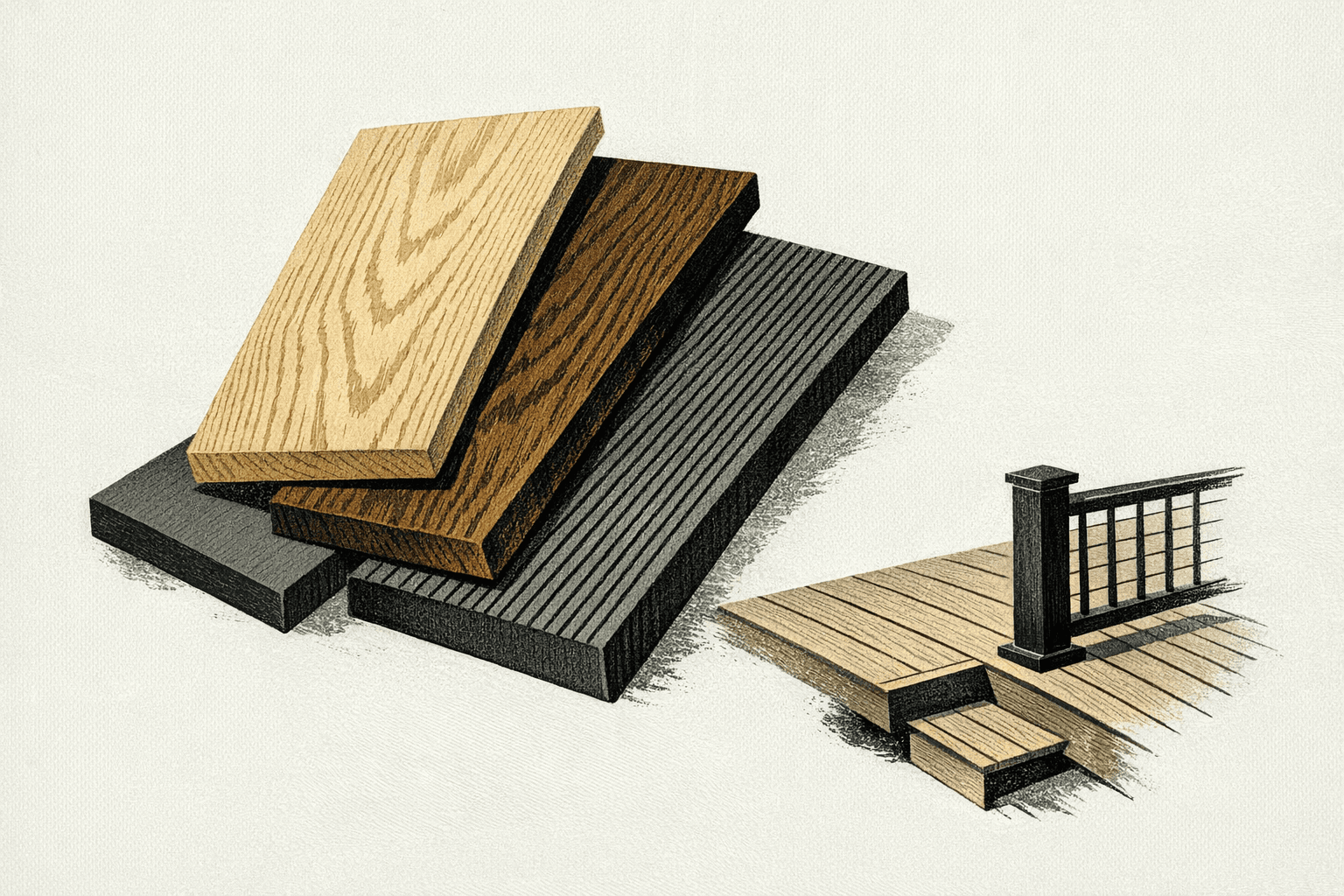
Decking Material Comparison
Directional planning ranges for common residential builds before complex site work or premium custom features.
| Material | Typical installed range | Main tradeoff |
|---|---|---|
| Pressure-treated lumber | $15 to $30 per sq ft | Lowest upfront cost, highest upkeep. |
| Cedar | $20 to $35 per sq ft | Better appearance, still needs maintenance. |
| Composite | $25 to $45 per sq ft | Higher upfront price, lower routine maintenance. |
| PVC | $30 to $55 per sq ft | Premium price, strong moisture resistance, cleaner upkeep profile. |
Why material choice changes the whole quote
Material does more than change the decking boards. It changes fastening systems, board spacing, trim details, finishing requirements, and homeowner expectations for maintenance.
That is why material comparison belongs before the final calculator run. A quote that feels expensive may simply reflect a higher-end material family rather than a contractor markup problem.
What each material is really buying you
Pressure-treated lumber is the budget entry point. It can be a solid choice when budget is tight and the homeowner is realistic about sealing, staining, and future board repair.
Cedar appeals to homeowners who want a natural look without jumping all the way into composite or PVC pricing. Composite usually becomes attractive when the homeowner wants fewer maintenance cycles and cleaner long-term budgeting. PVC is the most premium of the group and tends to appeal in wetter climates or where cleanup simplicity matters more than upfront spend.
Do not ignore the resale and maintenance layer
Installed price is only one side of the decision. JLC's 2024 Cost vs. Value report shows different recoup rates for wood and composite deck additions, which means the lowest upfront material is not automatically the strongest overall choice for every homeowner.
Maintenance also changes the real budget. If a homeowner hates the idea of regular cleaning, sealing, and stain cycles, the cheapest board may not feel cheap after a few seasons.
Where each material tends to fit best
| Material | Best fit | Watch out for |
|---|---|---|
| Pressure-treated | Budget-first builds and larger decks where upfront cost matters most. | More ongoing maintenance and a less premium finish. |
| Cedar | Homeowners who want natural wood appearance and moderate budget control. | Still needs care and weather protection. |
| Composite | Low-maintenance households and families planning to stay in the home longer. | Higher upfront spend and broader brand-level price spread. |
| PVC | Premium moisture-prone sites and homeowners who want very low routine upkeep. | Highest sticker price. |
What to do after you pick the likely material
Once you narrow the material family, open the deck calculator and run the real job. Size, deck height, stairs, railing, and state labor pressure often move the final number more than homeowners expect.
If the deck project is part of a broader exterior plan, compare it against the fence, roof, or window calculators so you do not commit the whole outdoor budget to one upgrade by accident.
Methodology and sources
Angi deck building cost guide
Updated Dec. 20, 2025. Material ranges, labor ranges, and permit context.
JLC 2024 Cost vs. Value Report
2024 report page. Wood vs. composite recoup framing.
Google helpful content guidance
Updated Dec. 10, 2025. Supports decision-useful content rather than filler comparisons.
FAQ
What is usually the cheapest deck material?
Pressure-treated lumber is usually the cheapest upfront decking material. It is popular because it keeps initial project cost down, but it generally needs the most maintenance over time.
Is composite decking worth the higher price?
Composite can be worth it for homeowners who value lower upkeep, longer finish consistency, and a cleaner long-term maintenance profile. It is less compelling if the main goal is the lowest upfront spend.
Does PVC decking always cost more than composite?
PVC usually sits at the premium end of the range, though exact pricing depends on brand tier, local availability, and project details like stairs and railing.
Should I choose a deck material before getting contractor quotes?
At least narrow it to one or two material families first. Otherwise, quotes can be hard to compare because the board choice changes both materials and labor assumptions.
Related calculators
Deck Cost Calculator
Estimate your actual deck by square footage, material, height, stairs, railing, and state.
Fence Cost Calculator
Helpful if you are planning the full backyard perimeter budget at the same time.
Home Improvement Calculators
Browse the full home-improvement calculator hub for roofs, windows, drywall, painting, decks, and fences.