Home Improvement Supporting Guide
Roof Replacement Cost by Material
Asphalt shingles are usually the lowest-cost mainstream replacement, metal raises the budget but can extend service life, and tile or slate sit in premium territory with heavier structural and labor considerations. Use the roof calculator once you know the likely material, because roof size, pitch, tear-off scope, and state labor pressure still move the quote a lot.
Roof quotes look simple when they start with one number. They become more useful when you split the decision by material. Asphalt, metal, tile, and slate can all protect the home well, but they carry very different install ranges, weight demands, and resale logic.
Updated March 2026 · Source-backed guide for the Home Improvement calculator cluster.
Next Step
Use the Roof Replacement Cost Calculator
Price the actual roof size, material, pitch, tear-off, and state once you know the likely material path.
Open calculatorWhat This Guide Solves
Material choice changes labor as much as material cost
Crew skill, tear-off handling, and structure all shift once you move beyond asphalt.
Resale is useful only after priorities are clear
Payback data helps when two options feel close, not when you still have not decided what the roof needs to do.
Exterior project sequencing matters
Roofing often consumes the same budget year as windows, decks, and fences, so the material choice has ripple effects.
Source Signals
Why this page is built for quick answers and AI citations
The page leads with clear answer blocks, visible dates, method notes, and named sources so the comparison can be cited without digging through filler paragraphs.
Source
Angi roof replacement cost guide
Updated Mar. 3, 2026. National material-level installed ranges and cost drivers.
Source
JLC 2024 Cost vs. Value Report
Resale-value framing for asphalt and metal roofing replacements.
Source
Google article structured data guide
Updated Dec. 10, 2025. Supports visible dates and author metadata for editorial pages.
Comparison Chart
Material choice changes the roof budget fast
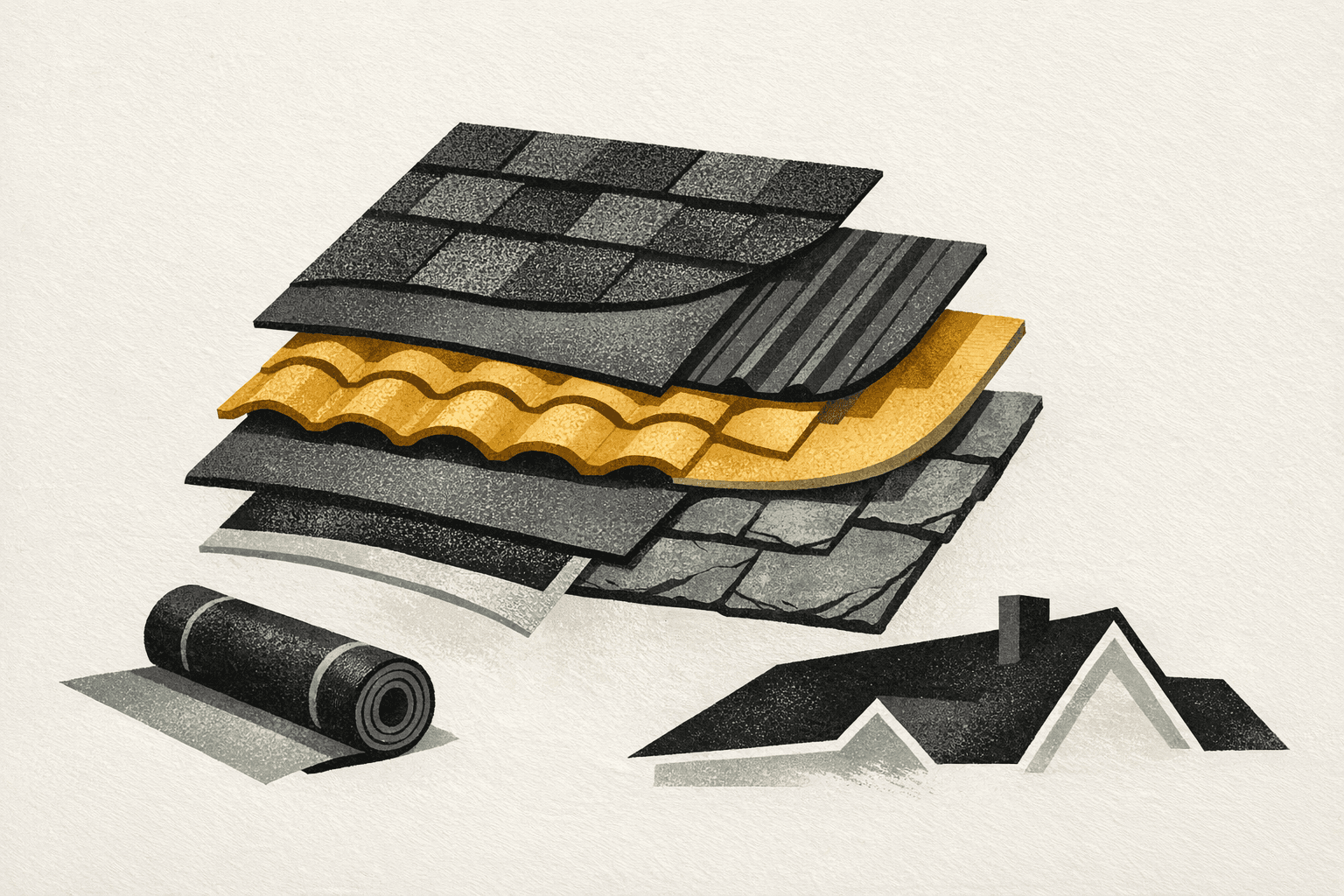
These midpoint values make the installed spread easier to compare before size, pitch, and tear-off layers enter the calculator.
Typical midpoint by roof material
Roof Replacement Cost by Material
Directional installed ranges from current national pricing guides for full replacement planning.
| Material | Typical installed range | Best fit |
|---|---|---|
| Asphalt shingles | $5,800 to $20,000 | Budget-conscious mainstream replacement. |
| Metal | $5,700 to $25,000 | Longer-life option with higher upfront cost. |
| Tile | $8,500 to $26,400 | Premium look in the right climate and structure. |
| Slate / stone | $5,800 to $30,000 | High-end projects where longevity and appearance lead. |
Material is the first roof decision because it changes everything else
Material changes more than curb appeal. It affects labor time, underlayment choices, tear-off handling, structural load, accessory compatibility, and the kind of contractor experience you should expect to pay for.
That makes material comparison the cleanest supporting article for a roof calculator. It helps the user narrow the quote before they start pricing pitch, square footage, or state-level labor pressure.
How to think about asphalt vs metal vs tile vs slate
Asphalt is usually the baseline because it is common, widely available, and lower cost. Metal moves the project into a different lifespan and performance conversation, but it also raises the budget and can introduce more installation detail.
Tile and slate sit further into premium territory. They can be the right answer for style, climate, or longevity, but they are not just expensive shingles. They can also change structure, crew requirements, and replacement logistics.
Use resale carefully, but do not ignore it
JLC's Cost vs. Value data shows that roofing choices can retain different shares of project cost at resale. That should not be the only reason to choose a material, but it is useful when two options feel close and the homeowner also cares about near-term marketability.
The more useful framing is this: some materials are better for payback, some are better for lifespan, and some are better for appearance. The best roof is the one that matches the homeowner's actual priority instead of chasing a generic 'best roof' label.
How homeowners usually decide between roof materials
| Priority | Often points toward |
|---|---|
| Lowest upfront cost | Asphalt shingles |
| Longer service life with mainstream appeal | Metal |
| Premium style and climate-specific fit | Tile |
| High-end long-life luxury positioning | Slate |
Run the calculator after you narrow the material
After you choose the likely material family, the roof calculator becomes much more useful. Pitch, tear-off count, roof size, and state labor pressure can still move the total by thousands of dollars.
If the project is part of a larger exterior overhaul, compare the roof budget with windows, decks, or fence work before you commit. Homeowners often discover that the roof alone changes the timing of the rest of the exterior plan.
Methodology and sources
Angi roof replacement cost guide
Updated Mar. 3, 2026. National material-level installed ranges and cost drivers.
JLC 2024 Cost vs. Value Report
Resale-value framing for asphalt and metal roofing replacements.
Google article structured data guide
Updated Dec. 10, 2025. Supports visible dates and author metadata for editorial pages.
FAQ
What is usually the cheapest roof replacement material?
Asphalt shingles are usually the cheapest mainstream replacement option. Exact pricing still depends on roof size, pitch, tear-off complexity, and local labor rates.
Is a metal roof always worth the higher cost?
Not always. A metal roof can make sense when service life, weather performance, or lower maintenance matter enough to justify the higher upfront spend. It is less compelling if the main goal is simply the lowest replacement quote.
Why do tile and slate quotes jump so much?
Tile and slate can require heavier labor, different installation methods, and in some cases structural review or support changes. Those factors push the total beyond the surface material price alone.
Should I compare roof materials before or after getting quotes?
Compare materials first, then get quotes. Otherwise you may compare two bids that look similar in scope but are built around very different roof systems.
Related calculators
Roof Replacement Cost Calculator
Estimate your actual roof once you know the likely material and slope assumptions.
Window Replacement Cost Calculator
Useful if you are sequencing multiple exterior projects around the same budget year.
Home Improvement Calculators
Browse the full home-improvement calculator hub for roofs, windows, drywall, painting, decks, and fences.