HVAC Supporting Guide
Tank vs. Tankless Water Heater Cost
Tank water heaters usually win on upfront cost, while tankless systems usually win on lifespan, space savings, and lower operating waste. The right answer depends on your hot-water demand, installation conditions, and how long you expect to stay in the home. Use the calculator when you want to price the actual type, size, venting, permit scope, and state labor pressure.
Water heater shopping usually starts with a type question, not a final quote question. Homeowners want to know whether a lower-cost storage tank is still the smarter buy or whether tankless is worth the extra install cost.
Updated March 2026 · Source-backed guide for the HVAC calculator cluster.
Next Step
Use the Water Heater Cost Calculator
Run a full planning estimate for tank, tankless, or heat-pump options with type-specific cost drivers.
Open calculatorWhat This Guide Solves
Emergency timing usually favors a tank
Fast restoration and simpler swap logic keep tank systems in the lead when the old unit failed today.
Tankless only pencils out when the install is honestly scoped
Gas, venting, drain, and electrical work need to be visible or the bid is not really comparable.
The efficiency path deserves its own lane
Heat-pump water heaters are not just a footnote because incentives and operating costs can materially change the comparison.
Source Signals
Why this page is built for quick answers and AI citations
The page leads with clear answer blocks, visible dates, method notes, and named sources so the comparison can be cited without digging through filler paragraphs.
Source
Angi tank vs tankless guide
Updated Feb. 19, 2026. Core tank vs tankless cost and lifespan framing.
Source
DOE heat pump water heaters guide
Official efficiency and installation-fit guidance.
Source
IRS energy efficient home improvement credit
Page last reviewed Oct. 24, 2025. Current tax-credit limits and eligibility notes.
Comparison Chart
Three water-heater paths, three very different budgets
Midpoint values help show why tankless and heat-pump systems belong in planned-comparison territory, not quick-swap territory.
Typical midpoint by system type
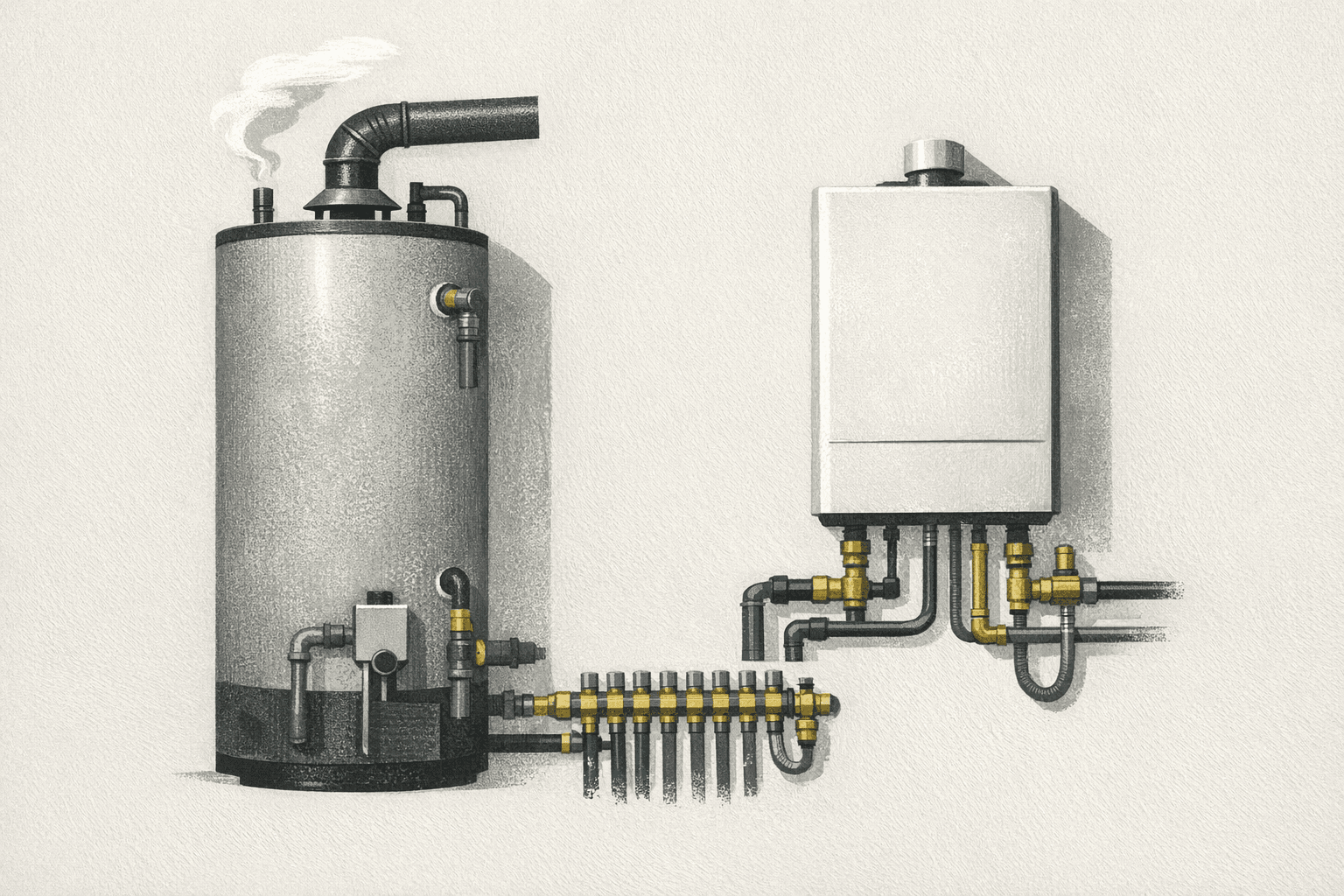
Tank vs Tankless Water Heater Comparison
Directional homeowner planning ranges for replacements in a typical residential setup.
| System | Typical installed range | Usually best for |
|---|---|---|
| Standard tank | $900 to $2,500 | Lower upfront replacement cost and households with familiar like-for-like installs. |
| Tankless | $2,000 to $4,800 | Homes prioritizing space savings, longer lifespan, and lower standby loss. |
| Heat-pump water heater | $2,500 to $4,800 | Electric homes chasing efficiency and tax-credit potential. |
Why homeowners choose tank first and tankless second
Tank systems are easier to understand because they are familiar and the upfront quote is usually lower. That alone makes them the default replacement choice when the old unit fails and hot water needs to come back quickly.
Tankless becomes more attractive when the homeowner is planning ahead and can compare lifespan, floor-space savings, and lower standby energy loss instead of only reacting to an emergency failure.
Where the real cost difference comes from
The gap is not just the equipment. Tankless systems can require more labor, more venting detail, or utility upgrades. That is why the initial spread between tank and tankless can look larger than homeowners expect.
This is also why a cheap tankless quote should be read carefully. If gas-line, venting, drain, or electrical work is not clearly addressed, the bid may be incomplete rather than efficient.
The main reasons tankless installs cost more upfront
| Driver | Why it adds cost |
|---|---|
| Venting or exhaust changes | Tankless installs often need more exact vent treatment. |
| Gas or electrical upgrades | Some homes need utility work before the unit can run correctly. |
| Conversion labor | Switching from tank to tankless is more involved than swapping like for like. |
| Maintenance expectations | Tankless systems still need periodic flushing and care. |
Do not skip the efficiency and incentive layer
DOE notes that heat-pump water heaters can be two to three times more energy efficient than conventional electric resistance water heaters. That matters if the home is already electric or the homeowner is weighing a hybrid upgrade instead of just tank vs tankless.
IRS guidance also matters here. Eligible improvements can qualify for annual tax credits, including up to $2,000 per year for qualified heat pumps and heat-pump water heaters through the current program window. That incentive does not automatically make the premium option cheaper, but it changes the comparison enough that it should be discussed.
When the calculator is the next step
Use the water-heater calculator after you narrow the likely system family. It prices the project better than a comparison article can because it accounts for venting, permits, emergency timing, size, and state labor pressure.
If your water-heater decision is part of a wider HVAC or efficiency plan, compare it with the furnace or window pages as well. Many homeowners discover that envelope upgrades or heating-system changes alter the best water-heater path.
Methodology and sources
Angi tank vs tankless guide
Updated Feb. 19, 2026. Core tank vs tankless cost and lifespan framing.
DOE heat pump water heaters guide
Official efficiency and installation-fit guidance.
IRS energy efficient home improvement credit
Page last reviewed Oct. 24, 2025. Current tax-credit limits and eligibility notes.
Bob Vila tank vs tankless comparison
Modified July 8, 2025. Additional install and maintenance comparison framing.
FAQ
Is tankless always cheaper in the long run?
Not always. Tankless often lowers standby energy waste and lasts longer, but the upfront install cost is much higher. The long-run winner depends on usage, utility rates, maintenance, and how long you stay in the home.
Why is a tankless conversion so much more expensive than a standard replacement?
Conversions can require venting work, gas or electrical upgrades, drain handling, and more labor. A like-for-like tank replacement is usually simpler and cheaper to install.
Where does a heat-pump water heater fit in this decision?
A heat-pump water heater is often the efficiency-focused upgrade path for electric homes. It usually costs more upfront than a standard tank but can lower operating costs and may qualify for federal incentives when it meets current standards.
Should I decide the system type before asking for quotes?
At least narrow it to two likely paths first. That way, installers can quote the same decision set instead of mixing simple tank swaps with conversion-level tankless bids.
Related calculators
Water Heater Cost Calculator
Estimate tank, tankless, and heat-pump water-heater costs with real project drivers included.
Furnace Cost Calculator
Compare another major mechanical-system budget before you commit to the utility-room plan.
HVAC Calculators
Browse the HVAC calculator hub for furnace, AC, and water-heater planning pages.