How Much Does a Furnace Cost in 2026?
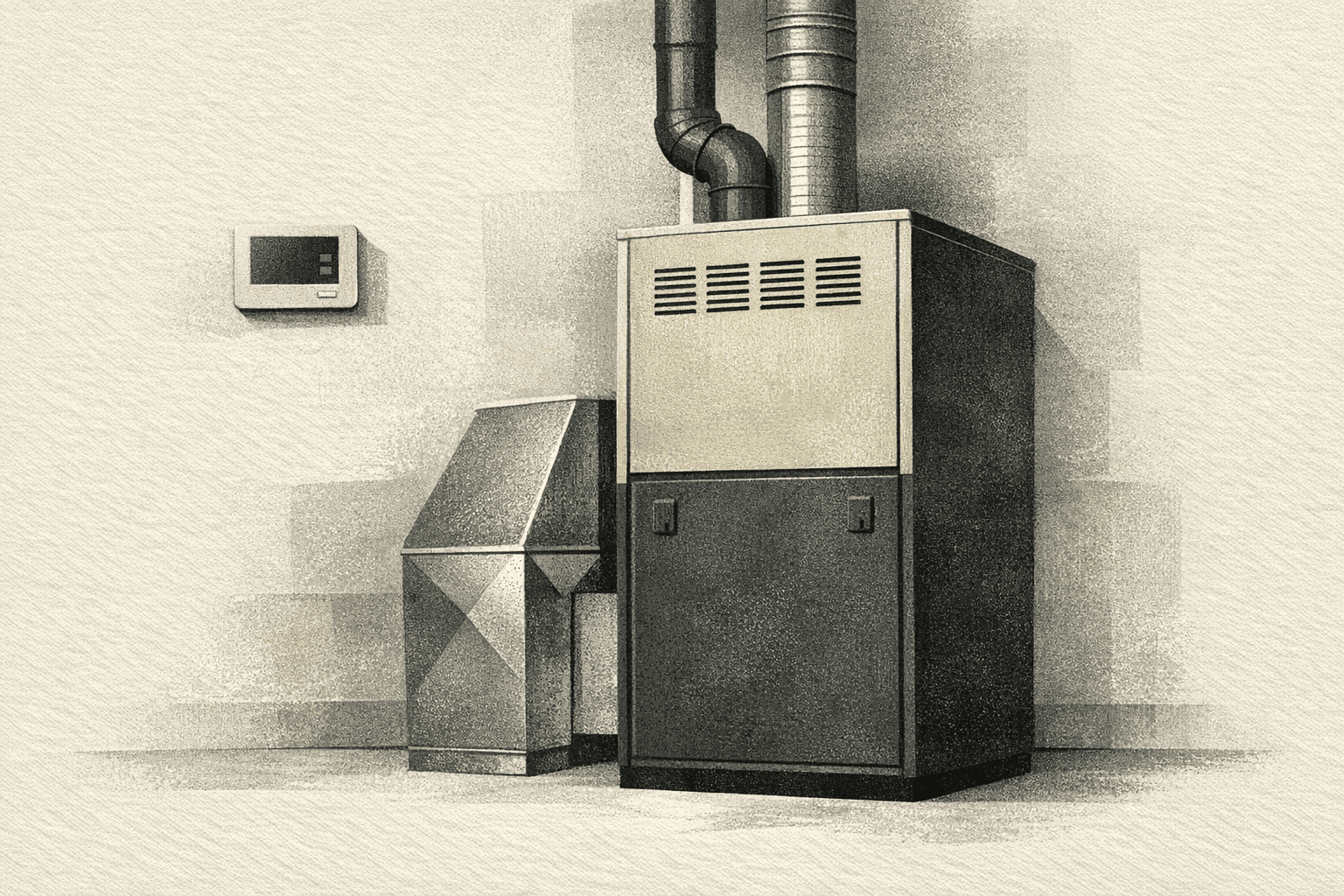
A furnace replacement usually costs about $2,800 to $7,500 installed, while many standard gas jobs land closer to $4,000 to $7,000. Electric furnaces sit lower, oil and propane can run higher, and totals jump when the project needs ductwork, chimney-liner work, fuel conversion, or emergency winter scheduling. Use the calculator below to compare realistic low, typical, and high scenarios before you collect bids.
Showing national averages
Loading calculator…
Updated March 2026 · Based on pricing data from Angi, Modernize, Homewyse, Fixr, DOE, ENERGY STAR, IRS, Carrier, and Lennox research reviewed on March 7, 2026
Average Furnace Costs by Fuel Type
Fuel type is the fastest way to narrow the quote range. It affects cabinet cost, venting, fuel hookups, maintenance, and your long-term utility bill.
| Furnace type | Typical installed range | Best fit |
|---|---|---|
| Electric | $1,800-$7,300 | Milder climates or homes without gas service |
| Natural gas | $3,800-$10,000 | Most common U.S. replacement path |
| Oil | $6,700-$10,000 | Older Northeast homes and colder markets |
| Propane | $3,700-$14,200 | Homes without natural-gas mains, often rural |
Furnace Size, BTUs, and Home Size
Square footage is only the starting point, but buyers still need a rough heating-capacity band to judge whether a quote is oversized or undersized. Climate matters more here than it does on many other HVAC jobs, so cold-state homes often need a larger furnace than same-size houses in the South.
| Home size | Common BTU band | Typical installed cost |
|---|---|---|
| 1,000 sqft | 30,000-60,000 BTU | $1,200-$2,500 |
| 1,500 sqft | 45,000-90,000 BTU | $1,800-$4,000 |
| 2,000 sqft | 60,000-120,000 BTU | $2,400-$5,500 |
| 2,500 sqft | 75,000-150,000 BTU | $3,000-$7,000 |
| 3,000 sqft | 90,000-180,000 BTU | $3,600-$9,000 |
Do not treat this table as a final sizing answer. DOE guidance and HVAC best practice still favor improving air sealing and insulation first, then having the installer size the system to the house you actually own today, not the drafty house it used to be.
What Actually Moves The Price
Fuel type: Gas is usually the baseline comparison. Electric often lowers the purchase price but not always lifetime cost. Oil and propane can climb because tanks, lines, and colder-climate demand raise the overall job.
AFUE tier: Standard 80%-83% units keep upfront cost down. High-efficiency gas models in the 90s or premium 97%-98.5% units add cabinet cost and can trigger different venting requirements, but they make more sense in long-heating-season markets.
Brand tier: Brand matters, but it should not distract from installation quality. A premium brand with sloppy venting or poor duct connection is still a bad project. Use brand as a secondary budget lever after load calculation, AFUE, and scope are settled.
Ductwork: Existing duct problems are one of the biggest reasons a quote rises after the site visit. Sealing and repairs may be manageable, while full replacement can add several thousand dollars.
Venting: Older chimneys, liner issues, and condensing-furnace vent paths are often missed by homeowners comparing headline prices. DOE specifically warns that high-efficiency units can require different venting than the old system.
Region and timing:State labor pressure, winter demand, and emergency replacement timing all matter. A planned shoulder-season job gives you more room to compare bids than a no-heat call during a cold snap.
Typical Cost Breakdown For A Mid-Range Gas Replacement
The exact mix changes by job, but most residential quotes break down into equipment, labor, venting, permits, and any hidden scope found after teardown.
| Line item | Common range | Why it changes |
|---|---|---|
| Furnace equipment | $1,800-$4,500 | BTU size, AFUE, brand tier, controls |
| Labor | $1,100-$2,000 | Access, timing, crew rates, setup complexity |
| Venting or liner work | $350-$2,500 | Condensing equipment, old chimney, exhaust route |
| Permits and inspections | $150-$1,100 | Jurisdiction and whether conversion work is involved |
| Haul-away | $75-$330 | Old furnace size and local dump fees |
| Duct repairs or replacement | $800-$5,500+ | Leaks, undersized trunks, or full system replacement |
How To Compare Furnace Quotes Without Guessing
Start by checking whether each contractor is quoting the same scope. A quote that looks cheaper may exclude permit handling, venting changes, haul-away, a filter cabinet, thermostat wiring, startup testing, or duct fixes. If one quote says 96% AFUE and another says 80%, you are not comparing the same product tier.
Ask every bidder to identify the proposed BTU size, AFUE rating, brand and model family, warranty terms, and whether the current vent path is compatible. If someone skips the load discussion and jumps straight to a cabinet swap, that is a warning sign. Furnace quotes go bad most often when sizing, airflow, and venting are treated as afterthoughts.
If you are choosing between repair and replacement, frame the decision around age, safety, and what is failing. Spending on a repair can be rational when the unit still has useful life and the heat exchanger is sound. But once repeated repairs, cracking, venting issues, or efficiency losses stack up, the cheapest short term choice is rarely the cheapest annual-cost choice.
Ways To Keep Furnace Replacement Cost Under Control
Replace early if you can. Spring and fall usually give you better scheduling flexibility, fewer emergency premiums, and more time to compare high-efficiency vs standard options.
Improve the house before oversizing the furnace. Air sealing, insulation, and window upgrades can reduce the heating load, and DOE specifically recommends improving envelope efficiency before final furnace sizing.
Look at incentives, but read the rules carefully. ENERGY STAR and IRS guidance still make some high-efficiency furnaces and related residential energy property eligible for federal tax credits, but the qualification rules are now strict enough that you should confirm eligibility with the contractor and the product documentation before counting the credit.
Methodology and Assumptions
This calculator uses a range model anchored to live 2025-2026 market sources, including Angi, Modernize, Homewyse, and Fixr, plus official guidance from DOE, ENERGY STAR, IRS, and manufacturer product pages from Carrier and Lennox. The model treats furnace type and heating-capacity band as the main cost anchors, then layers efficiency tier, brand tier, venting scope, ductwork, utility upgrades, permits, state pricing pressure, and timing.
The estimate is directional, not a quote. Real jobs vary because venting compatibility, existing duct design, panel capacity, gas piping, ceiling height, insulation, climate, and contractor availability differ house by house. That is why CostFigure shows a range and itemized drivers instead of pretending one national average can answer every job.
We explicitly chose not to launch state or ZIP programmatic pages with this release. The research shows strong local intent, but it also shows that furnace pricing depends too heavily on climate, fuel availability, and existing infrastructure for thin geography-swapped pages to clear the repo's research-first pSEO standard. The canonical calculator should ship first. Any furnace pSEO cluster should come later, after CostFigure builds a stronger regional dataset.
Frequently Asked Questions
How much does a new furnace cost?
A new residential furnace typically costs about $2,800 to $7,500 installed, with many standard gas replacements landing around $4,000 to $7,000. Electric furnaces usually sit at the low end, gas in the middle, and oil or propane can run higher once venting, tanks, or fuel-line work enter the job. Large homes, premium brands, new ductwork, and emergency winter replacement can push totals above $10,000.
How much does it cost to replace a furnace in a 2,000-square-foot house?
For a 2,000-square-foot house, a straightforward gas-furnace replacement often lands around $4,500 to $8,000 depending on climate, AFUE tier, venting, and local labor rates. Many homes that size need roughly 70,000 to 100,000 BTU of heating capacity, but the exact load can move up or down based on insulation, windows, ceiling height, and how cold your winters get.
Is a high-efficiency furnace worth the extra money?
It often is in colder climates, especially if you are replacing an older 60% to 75% AFUE unit. High-efficiency furnaces cost more upfront because they use better heat exchangers, sealed combustion, and more involved venting, but they can cut heating bills and improve comfort. In mild climates with short heating seasons, the payback is weaker, so a well-installed standard unit can still be the better value.
Why do furnace quotes vary so much?
Two furnaces can look similar on paper and still produce very different quotes because the furnace cabinet is only part of the job. Duct repairs, chimney liners, PVC vent runs, gas or electrical upgrades, permits, haul-away, thermostat changes, filter cabinets, and emergency timing all move the total. Brand tier and AFUE also matter, but hidden installation scope is usually the bigger reason quotes spread out.
Does a high-efficiency furnace need different venting?
Often, yes. DOE guidance notes that high-efficiency sealed-combustion furnaces can require different venting or chimney-liner work because the exhaust is cooler and more acidic than older systems. That is why a quote for a 95% to 98% AFUE furnace can jump after the installer checks the vent path. If a contractor recommends new venting, ask whether the current chimney is oversized, unlined, or incompatible with condensing equipment.
Should I replace a furnace during an emergency or wait?
If the furnace is unsafe, cracked, or has failed during cold weather, replacement usually cannot wait. But if the system is still running and you are planning ahead, spring and fall usually give you more scheduling flexibility and better quote comparison conditions. Emergency winter replacement often costs more because demand is higher and homeowners have less time to compare scope, venting, and equipment options.
Distribution
Embed this calculator on your site
Use the hosted CostFigure widget on contractor pages, partner sites, and blog posts without copying calculator logic into another codebase. The embed keeps CostFigure styling isolated and includes a restrained powered-by link back to the canonical calculator.
- Hosted by CostFigure, so updates ship once.
- Noindex utility route avoids duplicate-content SEO problems.
- Best-effort embed-load tracking records slug and referrer host.
iframe embed code
<iframe
  src="https://costfigure.com/embed/how-much-does-a-furnace-cost/"
  title="Furnace Cost Calculator by CostFigure"
  loading="lazy"
  referrerpolicy="strict-origin-when-cross-origin"
  style="width: 100%; min-height: 1420px; border: 0;"
></iframe>
The iframe keeps CostFigure styles isolated, loads lazily, and uses origin-only referrer behavior when the host browser permits it.
Related Calculators
HVAC Hub
Browse CostFigure's heating and cooling calculators.
New AC Unit Cost Calculator
Useful when you are comparing furnace-only replacement against a full HVAC system update.
Window Replacement Cost Calculator
Envelope upgrades can reduce heating load and may change the furnace size you actually need.
New Roof Cost Calculator
Attic ventilation and insulation decisions affect furnace comfort, efficiency, and winter utility bills.
Supporting Guides
Furnace Repair vs. Replace
Use age, repair cost, safety risk, and efficiency clues to decide when a furnace repair still makes sense and when replacement is smarter.
Tank vs. Tankless Water Heater Cost
Compare tank and tankless water-heater costs, maintenance, and payback so you can choose the right system before pricing the install.